
The Indoor Foliage Capital of the World
Artificial Turf in Apopka, FL
Synthetic lawns that leave room for real plants, use no fertilizer and take irrigation off the schedule.
- Free on-site estimates
- Written, itemized quotes
- Drainage and base planned for Florida rain
Turf for a Town That Loves Plants
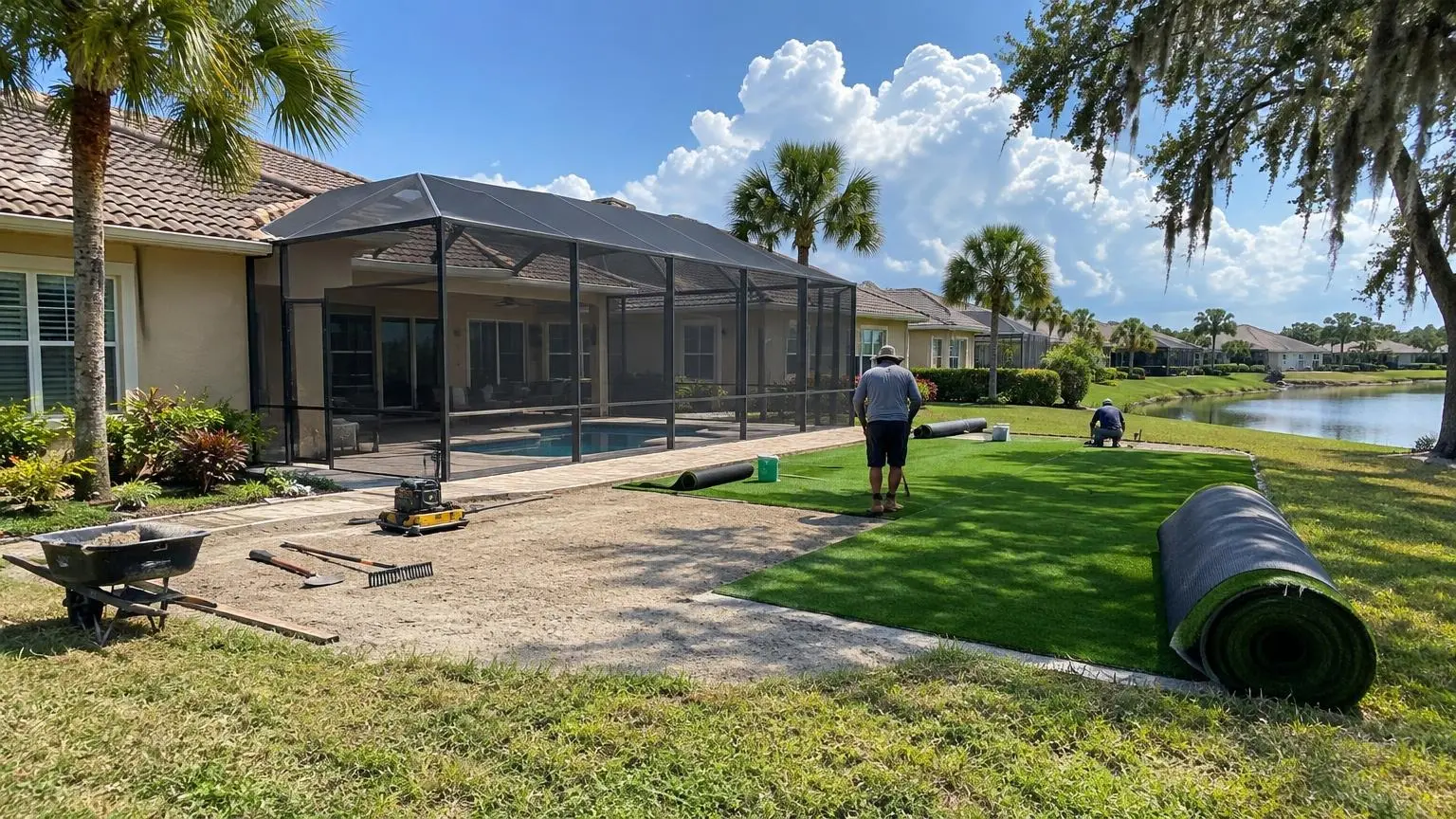
Apopka calls itself the Indoor Foliage Capital of the World, thanks to its many greenhouse nurseries, so it may seem odd to talk about artificial turf in Apopka. But many homeowners here are gardeners first. They would rather spend water and weekends on beds, palms and shrubs than on a patch of grass that browns every spring dry season. A synthetic lawn handles the open space, and the real plants get the attention.
Turf and planted beds together
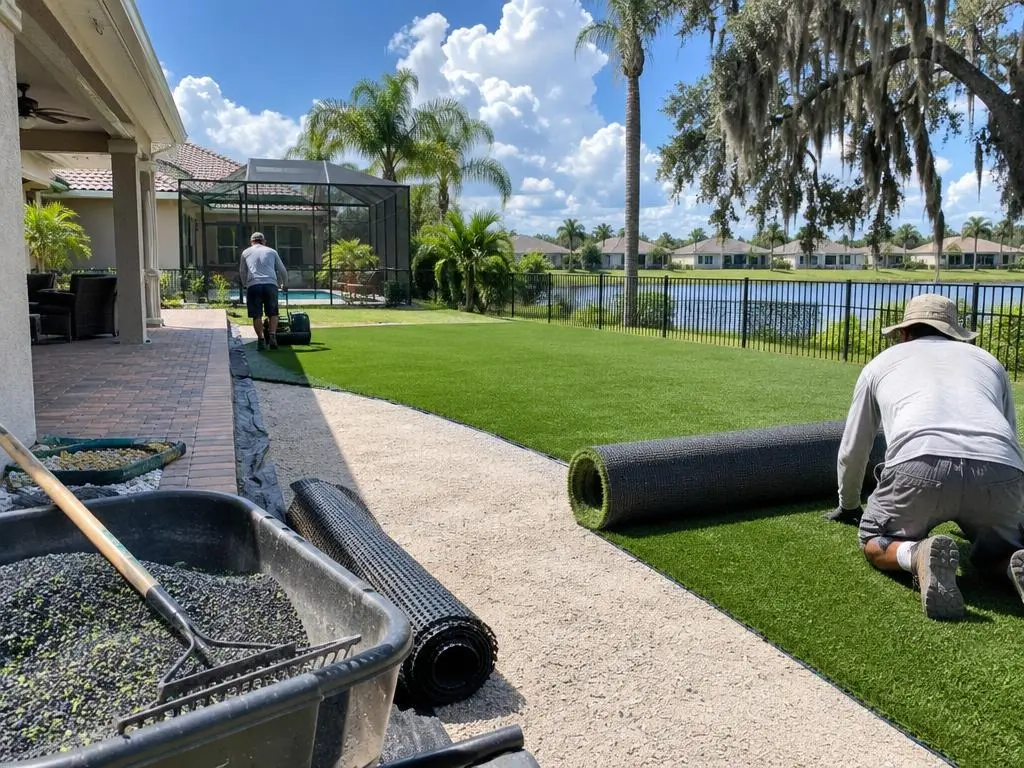
Many Apopka layouts work best when they mix both. Turf covers the play and walking areas, and planting beds frame it. The key is the transition. We set a solid edge between turf and mulch or soil so roots, sand and mulch stay where they belong, and we keep irrigation spray off the turf by converting heads near the edges to bed-only coverage. That way the plants get water and the turf stays dry and clean.
No fertilizer, less runoff
Lake Apopka, the fourth-largest lake in Florida at about 30,800 acres, spent decades fighting pollution. Farms on the north shore were the source of more than 85 percent of the phosphorus entering it, and restoration work now aims for a phosphorus level of 55 parts per billion. Synthetic grass needs no fertilizer and no weed and feed, so a turf yard sends nothing of that kind toward storm drains. We think that is worth mentioning to anyone living in the lake's watershed.
Springs and water use
Wekiwa Springs State Park, about 7,000 acres in Apopka, pours roughly 42 million gallons of water a day into the Wekiva River. Like the rest of Orange County, Apopka follows St. Johns River Water Management District irrigation rules: in normal times, two watering days a week in daylight saving time and one in winter, with nothing between 10 a.m. and 4 p.m. A turf lawn drops those zones off the timer for good.
Bigger lots, bigger projects
Apopka covers about 34.6 square miles of land, more than twice Ocoee's 15.6, and about 77.7% of homes are owner-occupied. Bigger yards open up options:
- Full-yard artificial turf installation
- Pet turf runs along fence lines
- Putting greens with fringe and chipping areas
- Playground turf with pads under play sets
- Commercial turf for nurseries' display areas, offices and HOA amenity spaces
- Repair and replacement of older synthetic lawns
Ground prep on sandy soil
Apopka's soils share the sandy character UF/IFAS describes for Central Florida: very sandy, and poor at holding water or nutrients. That is part of why grass here needs so much irrigation and feeding. For turf, sand drains well but shifts. We remove the old lawn, grade for runoff, then build and compact a crushed-stone base in layers so the surface stays level for years.
Fast-growing neighborhoods
The city grew from 26,642 residents in 2000 to 54,873 in 2020 and an estimated 65,552 in 2025. Newer subdivisions often come with an HOA. State law keeps associations from restricting items, artificial turf included, that cannot be seen from the frontage or an adjacent parcel, but front yards follow your covenants. Send us your guidelines with your estimate request.
Call (689) 210-0756 or
for a free written quote that spells out the base, turf, infill and any irrigation changes.Apopka Facts for Turf Buyers
- Foliage capital. Apopka is nicknamed the Indoor Foliage Capital of the World because of its many greenhouse nurseries, and plant-minded homeowners often pair turf with planted beds.
- Lake Apopka's phosphorus fight. Lake Apopka, Florida's fourth-largest lake at about 30,800 acres, took more than 85 percent of its phosphorus from north shore farms. Restoration targets 55 parts per billion. Turf needs no fertilizer.
- Wekiwa Springs. Wekiwa Springs State Park in Apopka covers about 7,000 acres, and its spring delivers about 42 million gallons of water a day to the Wekiva River at a steady 72 degrees.
- Large city, high ownership. Apopka has about 34.6 square miles of land, 77.7% owner-occupied homes and 90.8% of residents in the same home a year earlier (Census ACS 2020-2024).
- Fast growth. The population rose from 26,642 in 2000 to 41,542 in 2010, 54,873 in 2020 and an estimated 65,552 in 2025, with housing units growing from 10,091 to 19,425 between 2000 and 2020.
Apopka Questions
Can I keep my garden beds and add turf?
Yes, and it suits a town where so many homeowners garden. We install a firm border between turf and beds and adjust sprinkler heads so the beds still get water while the turf stays dry.
Does artificial turf help protect Lake Apopka?
It removes one source of runoff: turf needs no fertilizer, herbicide or weed and feed. Rain soaks through the porous base into the sand instead of carrying lawn chemicals to storm drains.
Will turf work on a big Apopka lot?
It works on any size, but on larger yards many owners turf the areas they use most, like the back patio, play space and dog run, and keep the rest in natural or Florida-friendly landscaping. We can quote it either way.
What happens to my irrigation system?
Heads inside the turf area get capped or moved. Zones that serve only lawn can be shut off, and zones that serve beds keep running on your St. Johns watering days.
Artificial Turf Near Apopka
- Artificial Turf in Orlando, FL
- Artificial Turf in Winter Park, FL
- Artificial Turf in Winter Garden, FL
- Artificial Turf in Windermere, FL
- Artificial Turf in Ocoee, FL
- Artificial Turf in Kissimmee, FL
- Artificial Turf in St. Cloud, FL
- Artificial Turf in Doctor Phillips, FL
- Artificial Turf in Oviedo, FL
- Artificial Turf in Winter Springs, FL
- Artificial Turf in Lake Mary, FL
- Artificial Turf in Sanford, FL
- Artificial Turf in Altamonte Springs, FL
- Artificial Turf in Longwood, FL
- Artificial Turf in Clermont, FL
- Artificial Turf in Celebration, FL
- Artificial Turf in Maitland, FL